
The True Cost of an Empty Property in Glasgow (2026 Guide)
Quick Answer
An empty Glasgow property can incur Council Tax, insurance, financing, factor charges and maintenance. The actual Council Tax charge depends on the council's decision and any applicable exemption, discount or premium. Use your bill and policy documents when comparing keeping, letting or selling.
An inherited home, former rental or property awaiting repairs can remain empty while decisions are made. A simple budget helps show the cost of that delay without assuming everyone faces the same charges.
The time is never right when the costs are stacking up. Here's exactly what an empty property in Glasgow is costing you in 2026 — and what you can actually do about it.
Check the Council Tax charge for your property
From April 2026 the previous national limit on empty-home Council Tax premiums no longer applies. Individual councils decide their charges, and exemptions or exclusions may apply. Current Scottish Government guidance explains the position; obtain the rate and any relief decision for your Glasgow property.
To put real numbers on it:
| Cost | Use this evidence |
|---|---|
| Council Tax | Council bill and the decision on any exemption, discount or premium. |
| Insurance | A quote that reflects the actual occupancy and policy conditions. |
| Financing and factor costs | Lender and factor statements, including known common works. |
| Maintenance and security | Written quotes and a contingency for unexpected work. |
An inherited property or home genuinely marketed for sale or let may qualify for different treatment. Give the council accurate dates and supporting evidence and ask for its decision in writing.
If you're sitting on an empty property and haven't notified the council, the clock is ticking regardless. The 12-month period is calculated from the last date anyone occupied the property as their main home — even if ownership has changed.
Beyond Council Tax: The Full Cost Breakdown
Council tax is the unavoidable headline cost. But it's rarely the only one. Here's what most empty property owners are actually paying:
Insurance
Standard home insurance policies typically exclude — or significantly limit — cover for properties that have been unoccupied for more than 30–60 days. You'll need specialist empty property insurance, which costs £300–£800 per year depending on the property and location. Some Glasgow postcodes in higher-risk areas will push this towards the upper end.
Maintenance and Decay
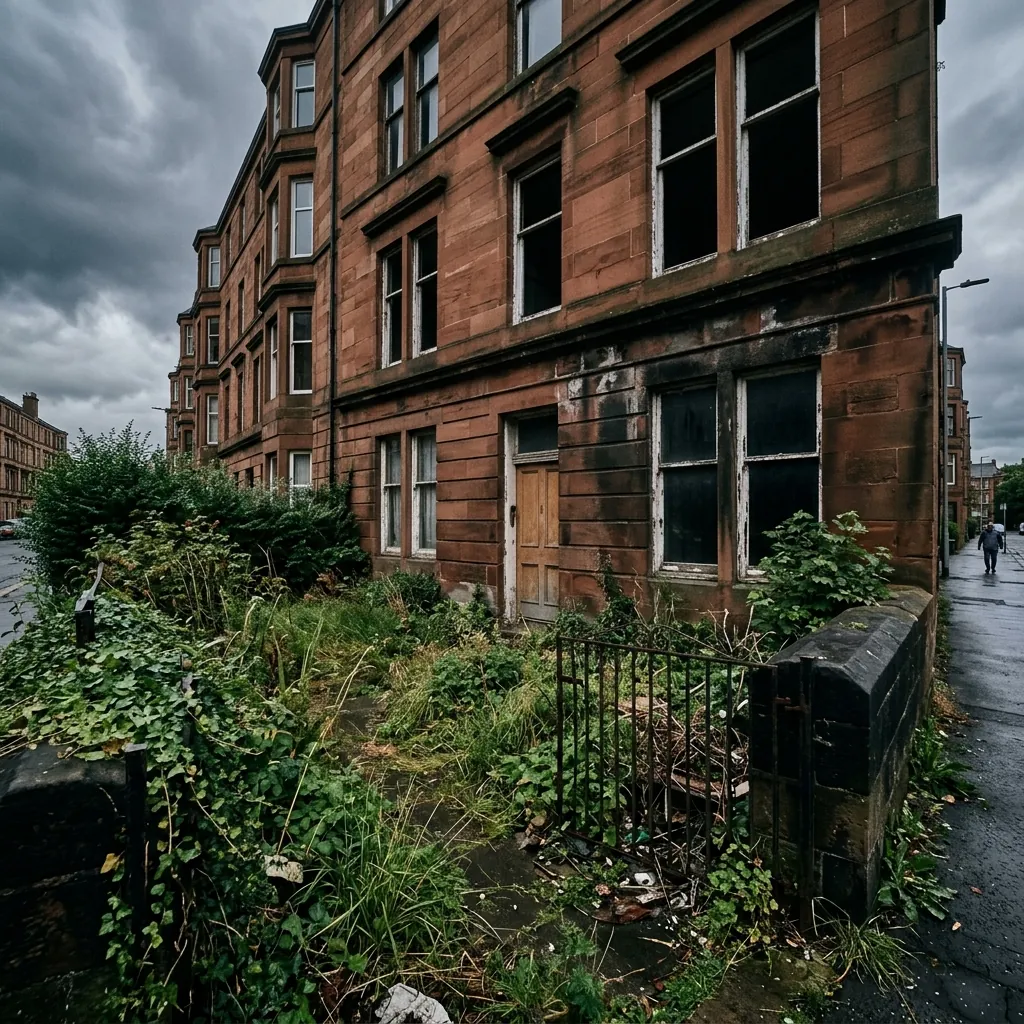
Properties deteriorate faster when nobody lives in them. No heating means condensation, which means damp. No foot traffic means you don't spot the small leak that becomes a big one. Glasgow's older tenements are particularly vulnerable — single-skin stone walls, original timber windows, and shared close responsibilities that don't pause because the flat is empty.
Budget at least £500–£1,500 per year for basic maintenance (pest control, gutter clearing, close charges, emergency repairs). If something major fails — boiler, roof section, burst pipe — costs escalate quickly.
Security
Empty properties attract attention. Squatters, vandalism, copper theft from boiler systems — it happens across Glasgow, not just in rough areas. Secure locks, mail redirection, and timed lights cost money. If you need to board up or install security, add another £200–£500+.
Lost Capital Value
An unattended leak or other defect can cause damage and affect what buyers will offer. Follow the insurer's inspection requirements and obtain repair advice when needed. No change in market value is assumed in the budget.
Build your own empty-property budget
Illustrative budgeting exercise only, not a completed client case: use the actual Council Tax bill, insurance quote, factor statements and repair estimates for your property.
- Council Tax from the start of the vacancy: check the dates and any exemption or discount with the council.
- Council Tax during a longer vacancy: ask the council for the actual applicable bill and any premium.
- Empty property insurance: £550
- Emergency plumber (burst pipe, winter 2025): £680
- Close charges and factor fees: £400
- Potential deterioration: record actual survey findings and repair estimates rather than assuming a fixed loss in value.
Add the actual costs for your expected holding period, then test a longer delay. Do not count a hypothetical fall in value as a known bill.
Why Properties End Up Empty (And Why People Put Off Dealing With Them)
Nobody plans to haemorrhage money on an empty flat. But these situations are more common than you'd think:
- Inherited property: The emotional weight of clearing and selling an inherited house, combined with the legal complexity of Confirmation (Scottish probate), means inherited properties often sit empty for a year or more.
- Ex-rental: Landlords who've had a difficult tenancy and need a break before deciding whether to sell, re-let, or renovate. Meanwhile, the empty property premium kicks in.
- Properties needing work: You know it needs a new kitchen, new bathroom, and probably rewiring before you can sell it — but you don't have £15,000 to spend upfront. So it sits.
- Relocation: You moved for work or family reasons, and the property hasn't sold yet. The costs of keeping it on the market stack up on top of the empty property costs.
- Dispute or divorce: Ownership is shared and nobody can agree on what to do. Months pass. The council doesn't care about your domestic situation — the bill arrives regardless.
Your Options (Realistically)
Option 1: Sell on the Open Market
Open-market exposure may help you compare more offers. Ask agents for comparable evidence, a written fee quote and a realistic estimate; check the Home Report requirement before marketing.
This is the best route if you can afford to wait, the property is presentable, and you want maximum price.
Option 2: Let It Out
Re-entering the rental market in Glasgow requires landlord registration, potentially HMO licensing, and compliance with the Repairing Standard. If the property needs significant work, the upfront investment can be substantial — and you'll need to factor in ongoing management costs. This only makes sense if you're planning to hold long-term.
Option 3: Sell Directly for Cash
Running costs continue until the relevant liabilities end; a proposed cash sale does not cancel them. SB Properties may buy directly or discuss an introduction to suitable investors. We assess the property and explain the route before any commitment. Offers may be below open-market value, and price, costs and timing are subject to assessment and legal checks.
You won't get the absolute top market price. But when you subtract the £7,000–£10,000 per year that an empty property costs, plus the repairs needed to make it sellable traditionally, the gap is often much smaller than people expect.
Stop the Drain on Your Empty Property
SB Properties may buy directly or discuss an introduction to suitable investors. We assess the property and explain the route before any commitment. Offers may be below open-market value, and price, costs and timing are subject to assessment and legal checks.
Discuss Your PropertyFrequently Asked Questions
When does the 200% council tax premium start?
The council sets its charge subject to the applicable rules and any relief. Check the property's empty period, occupancy and marketing history with the council, rather than relying on a generic percentage.
Can I avoid the premium by actively marketing the property?
Yes — properties empty for 12–24 months that are genuinely being marketed for sale or let can apply for an exemption. You'll need to provide evidence to Glasgow City Council. After 24 months, this exemption no longer applies.
Does the premium apply to inherited properties?
Yes. The council tax premium applies regardless of how you came to own the property. If you've inherited a home and it's been unoccupied for 12+ months, the premium applies. Read our guide on estate planning in Glasgow for advice on managing inherited property tax exposure.
Conclusion
An empty home can create ongoing costs. Use the actual bills and quotes to compare keeping, letting, improving or selling it, and check any exemptions before deciding.
Whether you sell on the market, re-let, or take a direct cash offer, the worst thing you can do is nothing. If you want to explore your options without any pressure, get in touch with our team. We've helped dozens of Glasgow property owners get out from under the cost of empty homes — quickly and on fair terms.
Sources and your next step
General information for property owners; ask a Scottish solicitor or appropriate adviser about your circumstances. The source links were checked for this content update on 11 October 2026.
Related seller guidance
Explore our property sale service or discuss your property. We may buy directly or discuss an investor introduction; offers may be below open-market value.